Why Your Event Photos Still Look Like They Were Taken Through a Potato
It’s 2026, and the smartphone in your pocket has more processing power than the cameras that shot professional magazine covers a decade ago. Yet, when you look back at your best friend's birthday or your cousin’s wedding reception, the photos are often blurry, grainy, or just plain boring.
The problem isn’t your hardware. Even with the latest AI-integrated sensors and triple-lens arrays, a great camera doesn't make a great photographer. The difference between a 'snapshot' and a 'photograph' lies in how you handle light, timing, and people.
If you’re tired of being the person who takes the 'bad' photos, this guide is for you. We’re going to look at how to master event photography using nothing but your phone, focusing on the specific challenges of 2026’s high-tech environment.
1. The 'Golden Rule' of Modern Sensors: Clean Your Glass
This sounds insulting, but it is the number one cause of ruined photos. Our phones live in our pockets and hands. They are covered in fingerprints, lint, and oils. When light hits a greasy lens, it creates that 'dreamy' (read: blurry and gross) haze around lights.
Before you take a single shot, use your shirt or a microfiber cloth. A clean lens allows the AI to map the room accurately, ensuring the autofocus hits the eyes of your subject rather than the smudge on your glass.
2. Mastering the 2026 'AI-Depth' Portrait Mode
By now, most phones use sophisticated depth mapping. However, most people use it incorrectly. They stand too far away or too close.
Finding the Sweet Spot
For the most natural 'bokeh' (that blurry background look), stand exactly 4 to 6 feet from your subject. If you are shooting a group of three people, ensure they are on the same focal plane. If one person stands six inches behind the others, the AI may accidentally blur their face, thinking they are part of the background.
Don't Overdo the Blur
In 2026, we have 'Variable Aperture' sliders. Don't crank the blur to the maximum. It looks fake. Set it to a mid-range (around f/4.0 or f/5.6 equivalent) to keep the hair and ears of your subject sharp while softening the venue behind them.
3. Lighting: Working With (and Against) the Venue
Venues are notorious for terrible lighting—fluorescent overheads, purple LED 'uplighting,' or pitch-black dance floors.
The Solution: The 45-Degree Turn. If you see a light source (a lamp, a window, or a neon sign), don't stand with your back to it. Instead, position your subject so the light hits them at a 45-degree angle. This creates 'Rembrandt lighting,' which adds depth to the face and prevents that flat, washed-out look.
Avoid the Digital Zoom. Even with the '100x Space Zoom' marketed today, digital cropping destroys image quality. If you want a close-up, use your feet. Walk closer. Your sensor captures significantly more data when it doesn't have to 'guess' pixels through digital enlargement.
4. The Secret to Capturing Raw Emotion
Stop asking people to 'Cheese!' Forced smiles look stiff and highlight every insecurity.
Instead, use the 'Action-Reaction' method. Wait for someone to tell a joke or for the music to start. Use your phone's 'Burst Mode' or 'Live Photo' feature. Take 10 photos in three seconds while people are actually laughing. One of those frames will be a masterpiece of genuine joy.
5. The Aftermath: Getting Everyone’s Photos Without the Headache
You’ve taken 200 amazing shots. So has everyone else. The old way of doing things—texting photos (which compresses them into grainy messes) or creating a shared 'cloud' folder that half the guests can't figure out—is dead.
This is where smart organization saves the day. When you use a platform like KnotShots.io, you don't have to play digital detective. Guests simply scan a QR code at the event and upload their high-resolution files instantly. It keeps the quality you worked so hard to capture and ensures that the host actually sees the photos you took, rather than them rotting in your camera roll forever.
6. Composition: The 'Rule of Thirds' is Just the Beginning
Turn on the 'Grid' in your camera settings. Most people put the subject's face right in the dead center of the frame. This is visually 'heavy' and static.
Instead, place the subject’s eyes on the top-right or top-left intersection of the grid lines. This leaves 'lead room' for the subject to look into, making the photo feel like a story rather than a mugshot.
The 'Low Angle' Power Move
For kids' birthdays or graduation photos, get low. Squat down so the camera is at chest level with the subject. This makes children look heroic and prevents the 'looking down on them' perspective that makes event photos feel amateur.
Summary: Your 3-Point Checklist for the Next Event
- Wipe the lens. Every. Single. Time.
- Find the light. Don't just point and shoot; look for where the glow is coming from.
- Think about the 'Full Story.' Don't just take photos of faces. Take photos of the decorations, the food, and the messy shoes on the dance floor.
Event photography in 2026 is about more than just megapixels; it's about being present enough to see the moment and technical enough to capture it correctly.
Ready to see everyone else's perspective? Don't let your guest's photos get lost in the void. Set up your event gallery on KnotShots today and start collecting memories in full resolution.
Related Articles
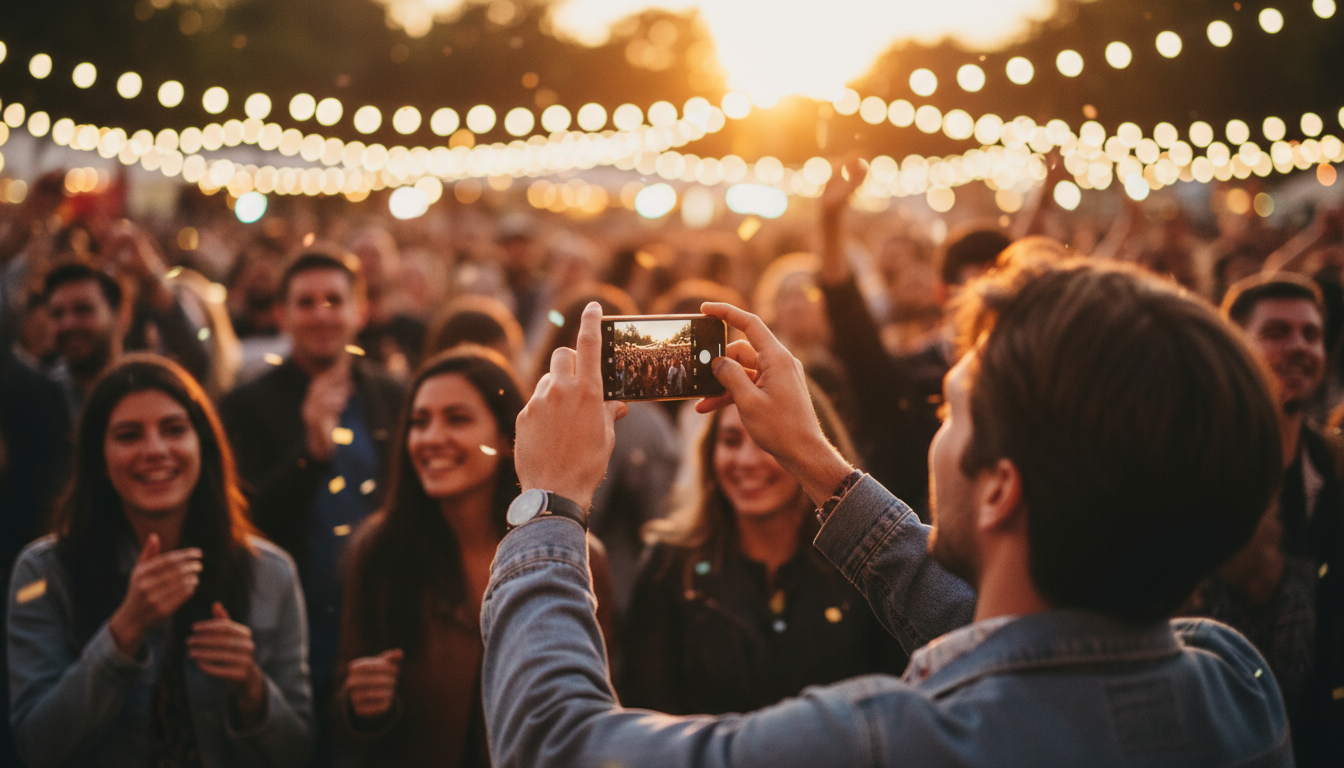
2026 Guide to Night Event Photography: Zero Flash, No Grain
Master low-light event photography with our 2026 guide. Learn to capture crisp, atmospheric photos without using a distracting flash or losing image quality.
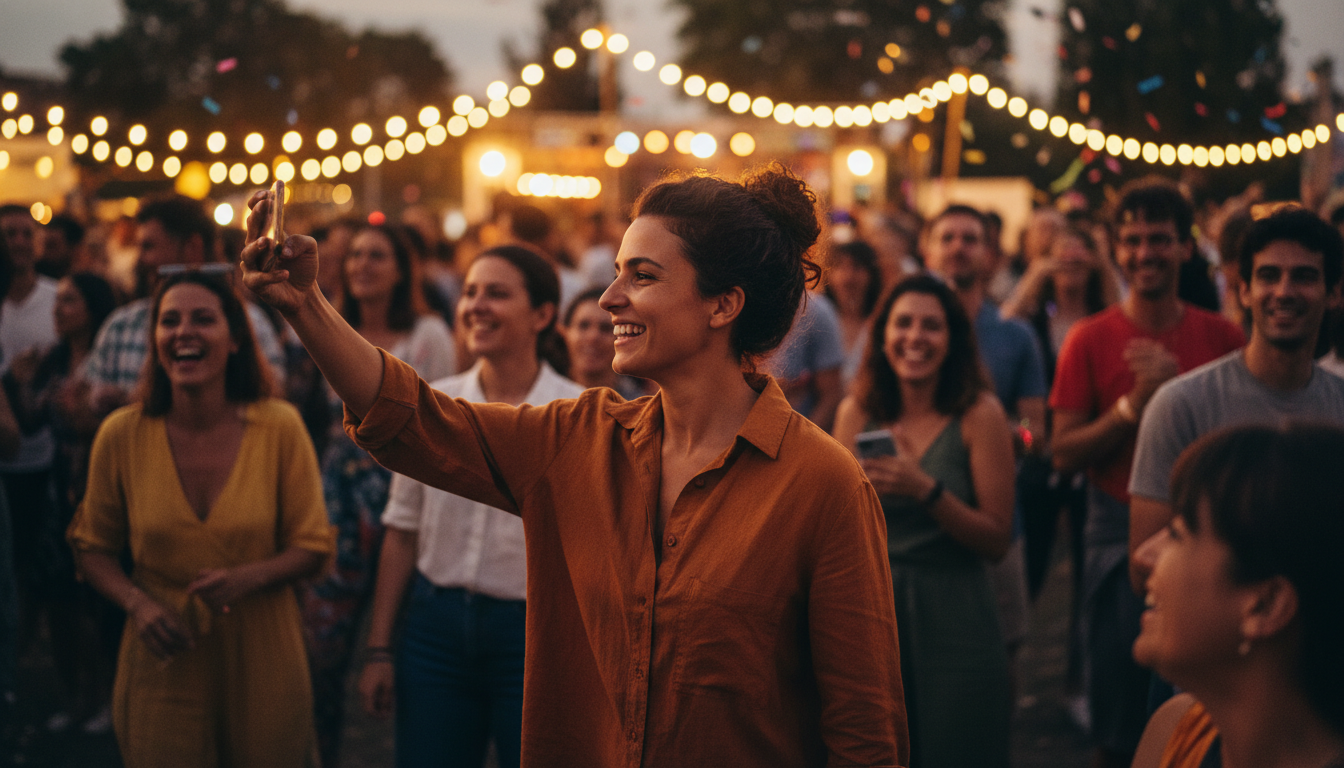
2026 Night Event Photography: Capture Pro Shots Without a Flash
Tired of grainy evening photos? Master low-light photography using your smartphone with these pro-level tips for 2026 events.
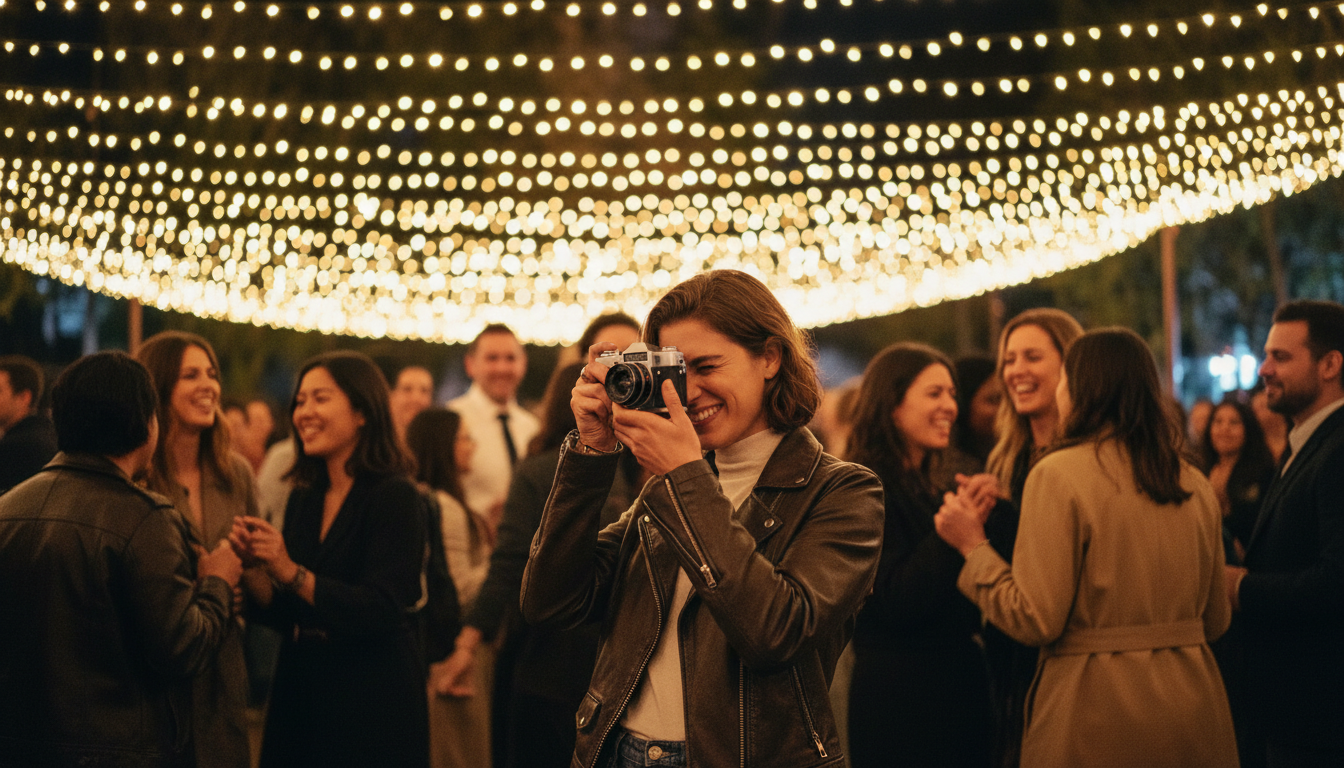
Capture the Vibe: The 2026 Guide to No-Flash Night Photography
Stop ruining event moods with harsh flashes. Learn how to capture stunning low-light photos using ambient light and modern camera tech.