You’ve seen it a thousand times: the birthday candles are lit, the room goes dark, and suddenly—BLAM—a harsh, clinical white flash obliterates the ambiance. The subject is overexposed, looking like a deer in headlights, while the beautiful venue decorations disappear into a pitch-black void. It’s the ultimate mood-killer for event photography.
As we move through 2026, the technology in our pockets has evolved significantly, yet most people still struggle to capture the magic of an evening gala, a candlelit wedding, or a neon-soaked birthday bash. The secret isn't more light; it's knowing how to work with the light you actually have. This guide will show you how to ditch the flash and embrace the shadows for professional-looking results.
1. The 2026 Tech Advantage: Sensors Over Speed
If you are using a flagship device from the last two years, you are carrying a low-light beast. The primary difference in 2026 photography is the shift toward 'Computational Raw' files. Unlike the compressed JPEGs of the past, your phone now captures massive amounts of data in the shadows.
To take advantage of this, you must stop using 'Auto' mode when the sun goes down. Auto mode is programmed to avoid blur at all costs, which usually means it pumps up the ISO (sensitivity) too high, resulting in 'digital noise' or grain. Instead, look for 'Night Mode' or 'Pro Mode.' These settings allow the sensor to stay open longer, drinking in the ambient light of the room rather than relying on a sudden burst of LED flash.
2. Stability is the New Shutter Speed
The biggest enemy of night photography isn't darkness—it's movement. When your camera is in a low-light environment, it slows down the shutter speed to let more light in. If your hands shake even a millimeter during that window, the photo is ruined.
The 'Tripod' Human Hack
If you don't have a gimbal or a tripod, you need to become one. Tuck your elbows tight against your ribs, take a deep breath, and exhale slowly as you tap the shutter button. Better yet, lean against a wall or a doorframe. In our tests with 2026 mobile sensors, a stabilized three-second exposure in a dimly lit lounge can look as clear as a studio shot, provided the phone doesn't move.
3. Chasing the 'Key Light' in the Room
Even in a dark room, light is rarely uniform. There is always a 'Key Light'—the strongest light source available. This might be a DJ’s neon sign, a string of fairy lights, or even a laptop screen at a corporate event.
The Strategy: Position yourself so your subject is facing that light source. If they have their back to the only light in the room, they will be a silhouette. By simply asking your friend to turn 45 degrees toward a decorative lamp, you transform a muddy, dark photo into a dramatic, high-contrast portrait. Look for 'catchlights' (the little glint of light in someone's eyes); if you see those, you have enough light for a great shot.
4. The AI Noise Reduction Revolution
Sometimes, despite your best efforts, a photo comes out looking a bit grainy. In 2026, grain is no longer a death sentence for a digital memory. Modern AI-denoising tools can now distinguish between 'detail' and 'noise' with 99% accuracy.
If you have a shot that is perfect in composition but looks 'sandy' in the shadows, run it through a mobile AI enhancer. These tools use neural networks to 'guess' what the missing pixels should look like based on millions of other photos. However, the golden rule remains: it is better to have a sharp, grainy photo than a clean, blurry one. AI can fix grain; it can’t fix a motion-blurred face.
5. Don't Let High-Quality Shots Get Lost
One of the most frustrating pain points of night events is the 'quality gap.' You might take an incredible, stabilized Night Mode shot, while your friend takes a grainy, flashed-out version of the same moment. When you text these photos to each other, the messaging apps compress them even further, destroying the low-light detail you worked so hard to capture.
This is where a dedicated high-fidelity platform becomes essential. By using a service like KnotShots, you can create a single gallery where everyone uploads their full-resolution files. Because KnotShots preserves the original metadata and quality, those subtle candlelit highlights and deep, rich blacks won't be crushed by standard social media compression. It ensures that the collective memory of the night looks as premium as the event itself.
6. Composition: Embrace the Negative Space
In night photography, what you don't see is just as important as what you do. Instead of trying to light up the whole room, focus on the subject and let the background fall into darkness. This is known as 'negative space.'
- Rule of Thirds: Place the lit subject on one of the vertical grid lines.
- Leading Lines: Use the glow of floor lights or a bar top to lead the viewer's eye toward the action.
- Depth: Keep some out-of-focus lights (bokeh) in the background to give the photo a sense of 3D space.
7. When to Actually Use the Flash (The 1% Rule)
Is the flash ever okay? Yes, but only as a 'Fill Flash.' If you are outdoors at night and there is a beautiful sunset behind your subject, their face will be a total shadow. A very low-power flash can 'fill' in their features while the camera sensor captures the background. However, for 99% of indoor events in 2026, your camera's sensor is more than capable of doing the job without that harsh white burst.
Summary Checklist for Your Next Night Event:
- Turn off Auto-Flash immediately upon arrival.
- Locate the brightest light in the room and use it as your 'studio' light.
- Brace your body against a solid object for any shot longer than 0.5 seconds.
- Expose for the highlights: Tap the brightest part of the screen to ensure the light doesn't 'blow out.'
- Gather the best versions from every guest in a high-res shared gallery to avoid compression loss.
Night events are about atmosphere, mystery, and warmth. By mastering these low-light techniques, you’ll stop taking 'pictures' and start capturing the actual feeling of the night.
Related Articles
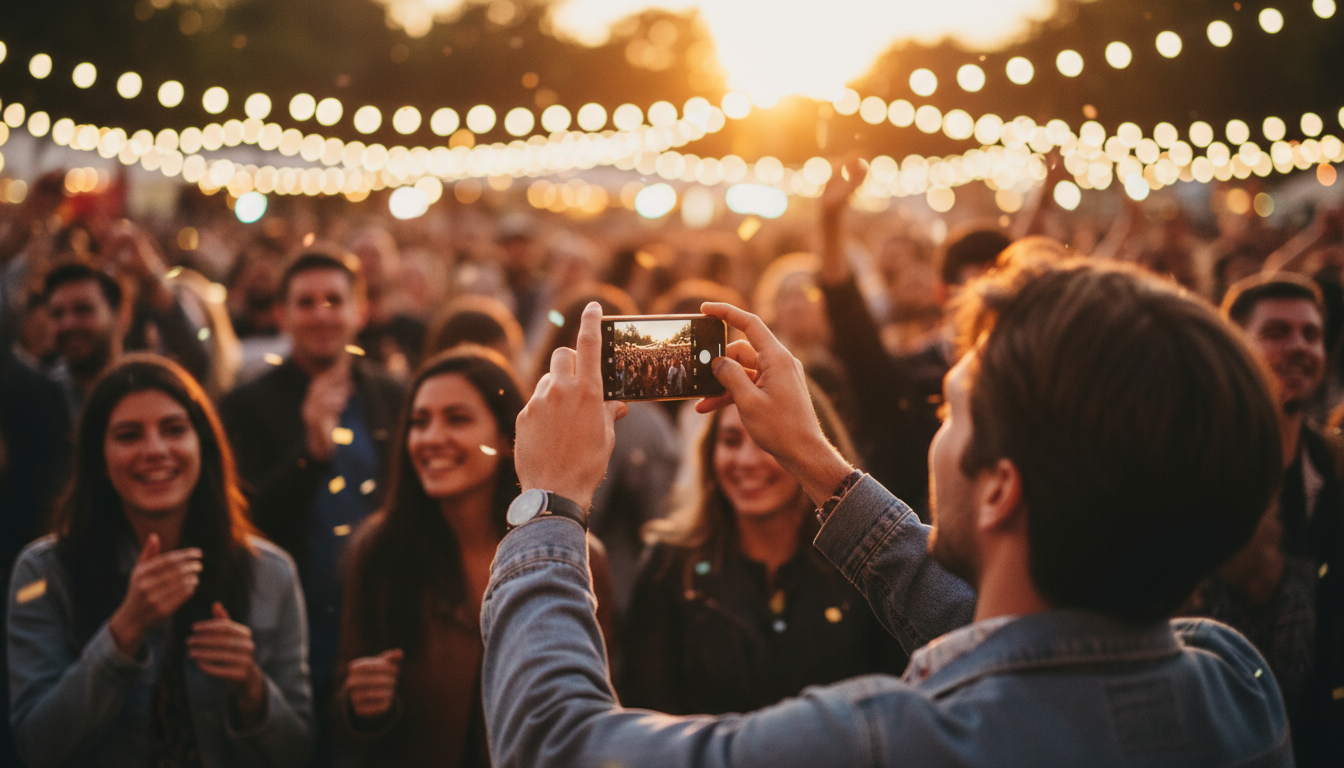
2026 Guide to Night Event Photography: Zero Flash, No Grain
Master low-light event photography with our 2026 guide. Learn to capture crisp, atmospheric photos without using a distracting flash or losing image quality.
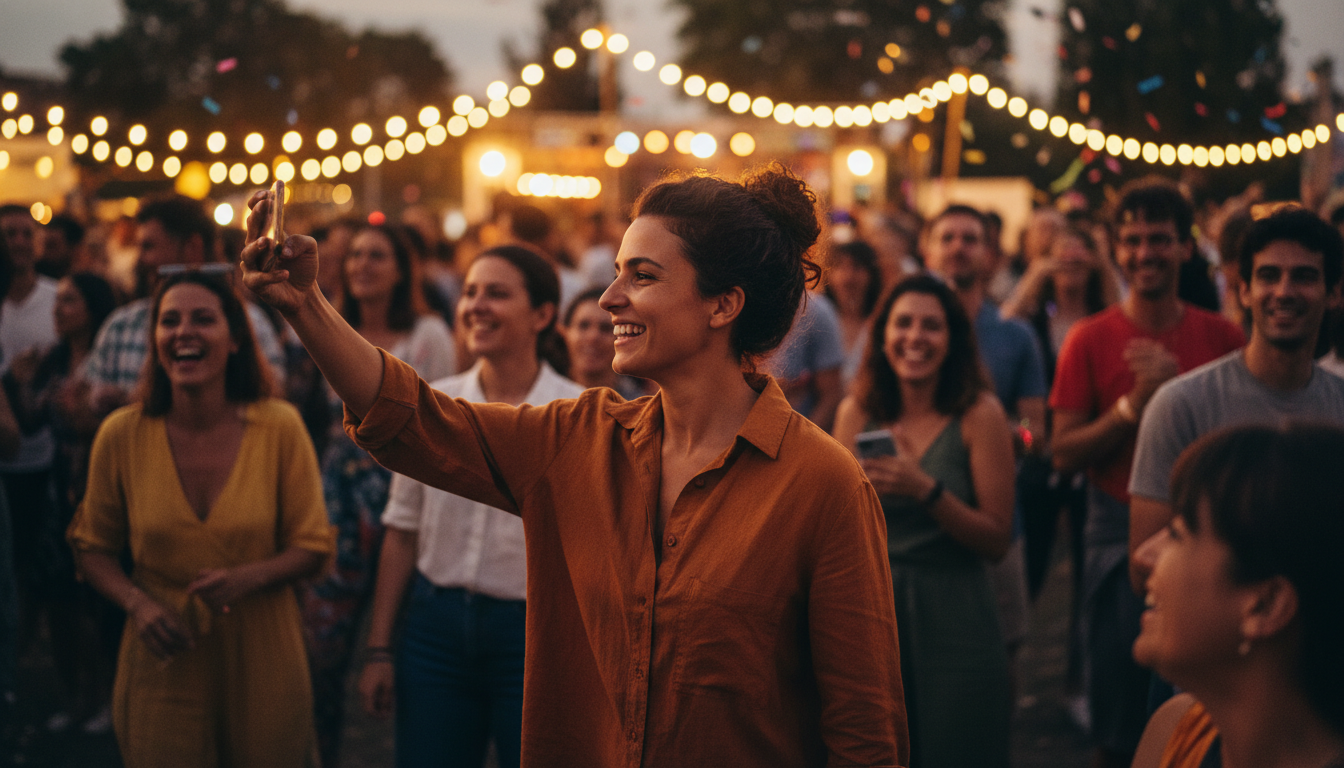
2026 Night Event Photography: Capture Pro Shots Without a Flash
Tired of grainy evening photos? Master low-light photography using your smartphone with these pro-level tips for 2026 events.
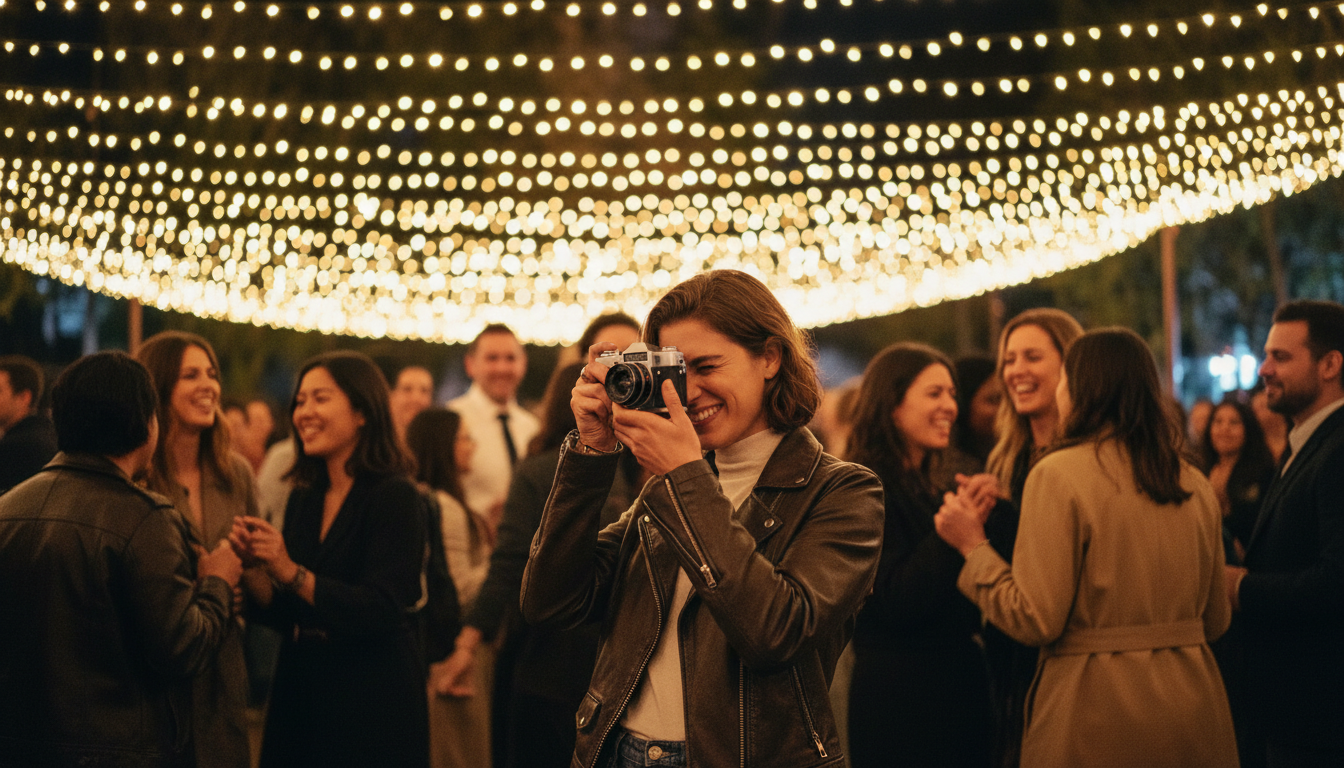
Capture the Vibe: The 2026 Guide to No-Flash Night Photography
Stop ruining event moods with harsh flashes. Learn how to capture stunning low-light photos using ambient light and modern camera tech.