Why the 'Perfect' Shot is Ruining Your Event Vibe
By 2026, we’ve all become hyper-aware of the lens. With high-definition cameras on every smartphone and the pressure of instant social media sharing, a significant portion of your guest list—up to 40% by some recent psychological surveys—experiences 'lens anxiety.' They see a camera, and they freeze, hide, or leave the room.
If you want a gallery that actually reflects the joy of your event, you have to stop hunting for poses and start designing for comfort. The most beautiful memories aren't the ones where everyone is staring at a glass lens with a plastered-on smile; they are the moments of genuine laughter, messy eating, and tearful reunions. This guide will show you how to capture those fleeting instances without making your introverted guests feel like they're under a microscope.
The Psychology of the 2026 Event Guest
In the current landscape of AI-enhanced imagery and deepfakes, people are more protective of their image than ever. When a photographer approaches a group, the immediate thought isn't 'Let's make a memory,' it's 'Where is this photo going to end up?'
To break this barrier, the host must set a tone of privacy and safety. When guests know that their photos aren't being broadcasted to the entire world immediately, their shoulders drop, and their real smiles emerge. This is where the shift from 'performance' to 'presence' happens.
Strategy 1: The 'Long Lens' Philosophy
Physical distance creates emotional space. If you are the designated photographer or even a friend with a good eye, avoid 'macro-invading.' Standing three feet away from someone's face while they’re mid-conversation is a guaranteed way to kill the mood.
Use Optical Zoom, Not Your Feet
By using a telephoto lens or the 5x optical zoom on the latest mobile devices, you can capture the sparkle in someone's eye from across the room. They remain immersed in their conversation, completely unaware they are being photographed. These are the shots that win awards and move hearts because they are 100% authentic.
Observe the 'Rule of Three'
If you see a group of three people laughing, wait. Don't jump in. Count to three. Often, the 'peak' of the laughter happens just after the initial burst. That is the moment you want to freeze in time.
Strategy 2: Ditch the 'Say Cheese' Mandate
Nothing creates a fake, strained expression faster than the word 'Cheese.' In 2026, we are moving toward 'Action-Based Photography.' Instead of asking people to look at you, ask them to do something.
- For Kids: 'Show me how fast you can jump!'
- For Adults: 'Tell me the funniest thing that happened this morning.'
- For Couples: 'Whisper your favorite cereal in her ear.'
When the brain is busy processing a task or a thought, the 'camera face' disappears. You get movement, genuine expression, and a story within the frame.
Strategy 3: Crowdsourcing Comfort with Private Sharing
One of the biggest pain points for camera-shy guests is the fear of the 'bad' photo being public forever. You can alleviate this by using a dedicated, private platform for your event photos.
By setting up a KnotShots.io gallery for your event, you provide a 'safe harbor' for memories. Guests are much more likely to snap candid photos of each other when they know the gallery is restricted to the people who were actually there. It removes the 'Instagram Performance' pressure and replaces it with a 'Family Living Room' feel. When the friction of public scrutiny is removed, even the most introverted uncle might find himself grabbing a few shots of the dance floor.
Strategy 4: Lighting for Confidence
If you want people to be okay with being photographed, you have to make them look good. Harsh, overhead lighting or a direct-on-camera flash is the enemy of the camera-shy. It emphasizes every wrinkle and shadow.
Seek the 'Golden Pockets'
Every venue has them. It’s the soft glow near a window, the warmth of a floor lamp, or the reflected light off a light-colored wall. Position yourself so the light is hitting your subjects at a 45-degree angle. This 'Rembrandt lighting' is universally flattering and makes guests feel more confident when they eventually see the results.
Use Diffused Flash
If you must use a flash, never point it directly at the person. Bounce it off the ceiling or a nearby wall. This mimics natural light and prevents that 'deer in the headlights' look that many guests dread.
Strategy 5: The 'Check-In' Ritual
For smaller, more intimate events like 20-person dinners or baby showers, transparency is key. At the start of the event, mention that you'll be taking candid photos but emphasize that the goal is to capture the vibe, not just faces.
Give people a 'safe word' or a simple hand gesture (like a small wave off) if they really aren't feeling it in a specific moment. Respecting that boundary immediately builds trust, and ironically, usually results in them being more open to photos later in the evening once they see you aren't being predatory with the camera.
Summary of Actionable Takeaways
- Distance is your friend: Use zoom to stay out of the personal bubble.
- Focus on action: Give guests a task rather than asking for a pose.
- Optimize for privacy: Use KnotShots to ensure guests feel safe from the public eye.
- Find the light: Flattering photos lead to more willing subjects.
- Respect the 'No': Trust is the foundation of great event photography.
Capturing an event in 2026 requires more than just technical skill; it requires empathy. By prioritizing the comfort of your guests over the 'perfect' shot, you'll end up with a gallery that is far more valuable: one that actually feels like the day itself.
Related Articles
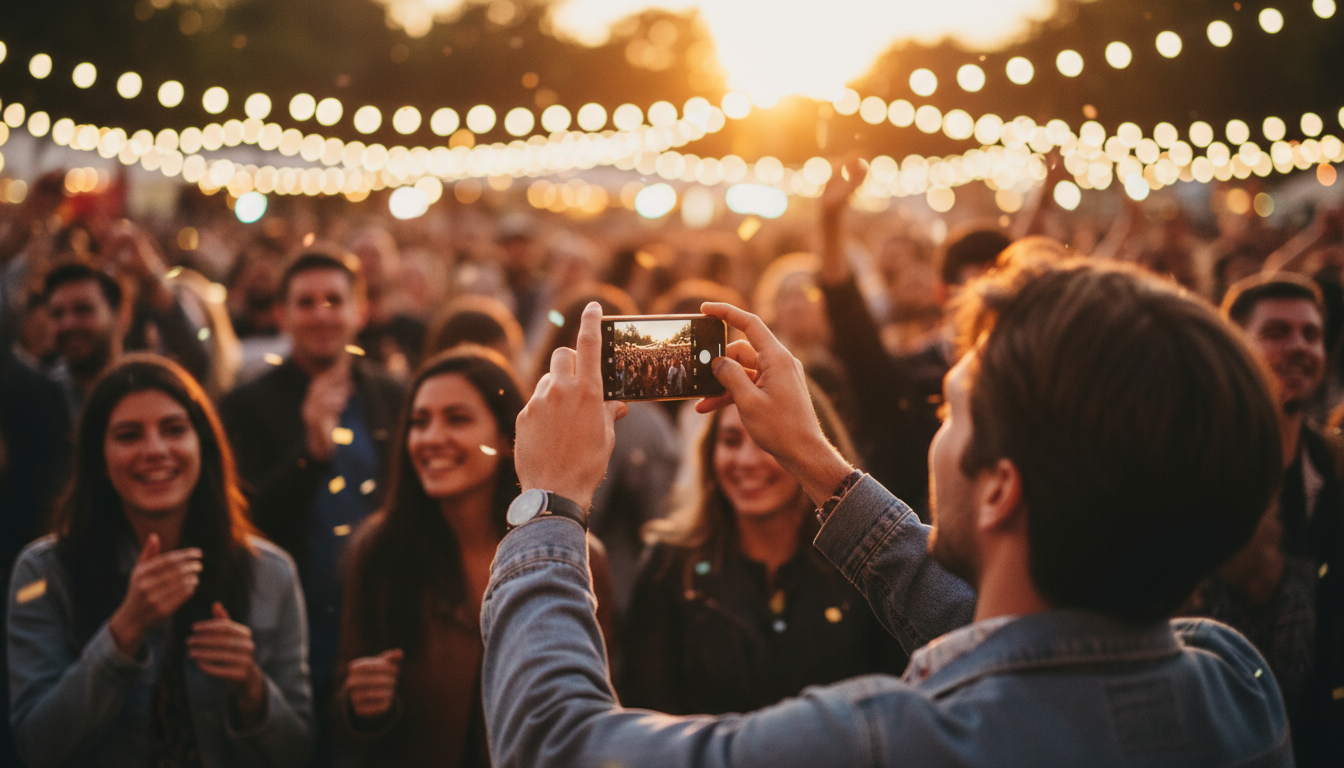
2026 Guide to Night Event Photography: Zero Flash, No Grain
Master low-light event photography with our 2026 guide. Learn to capture crisp, atmospheric photos without using a distracting flash or losing image quality.
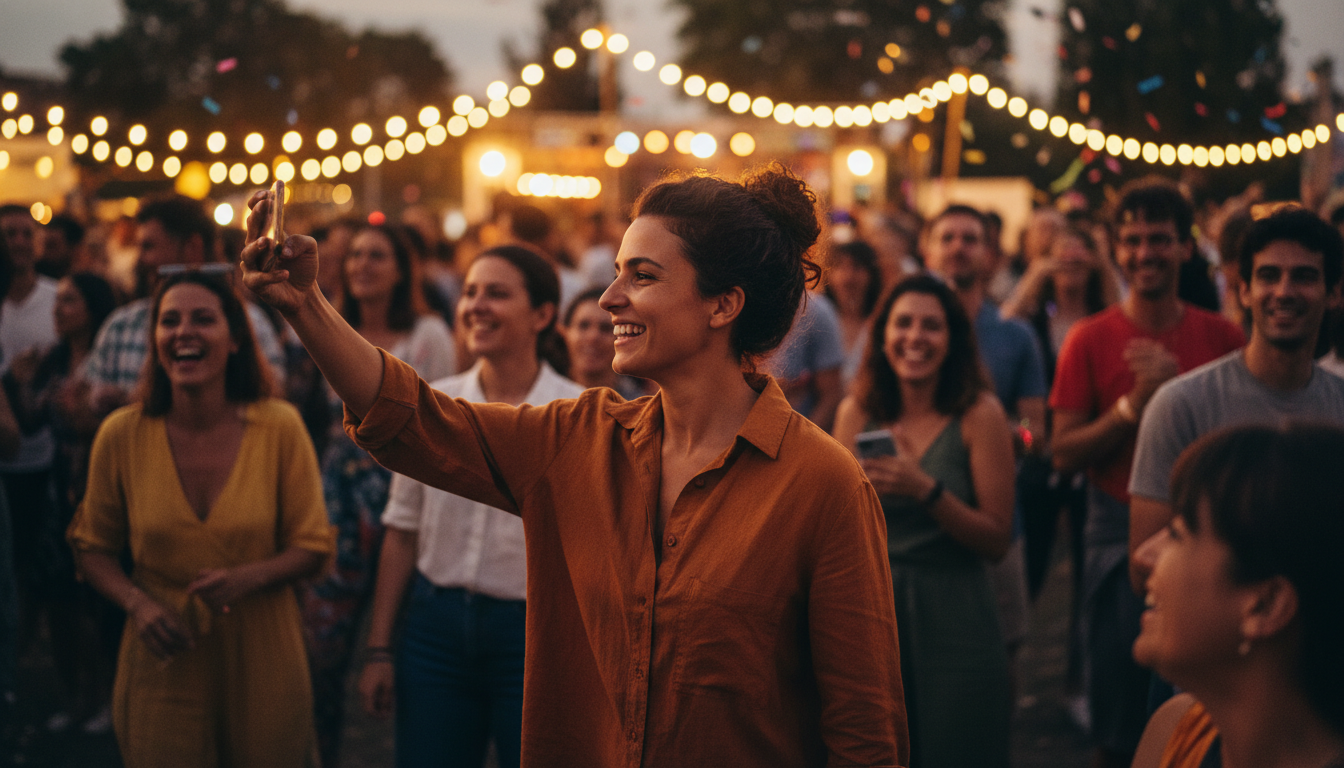
2026 Night Event Photography: Capture Pro Shots Without a Flash
Tired of grainy evening photos? Master low-light photography using your smartphone with these pro-level tips for 2026 events.
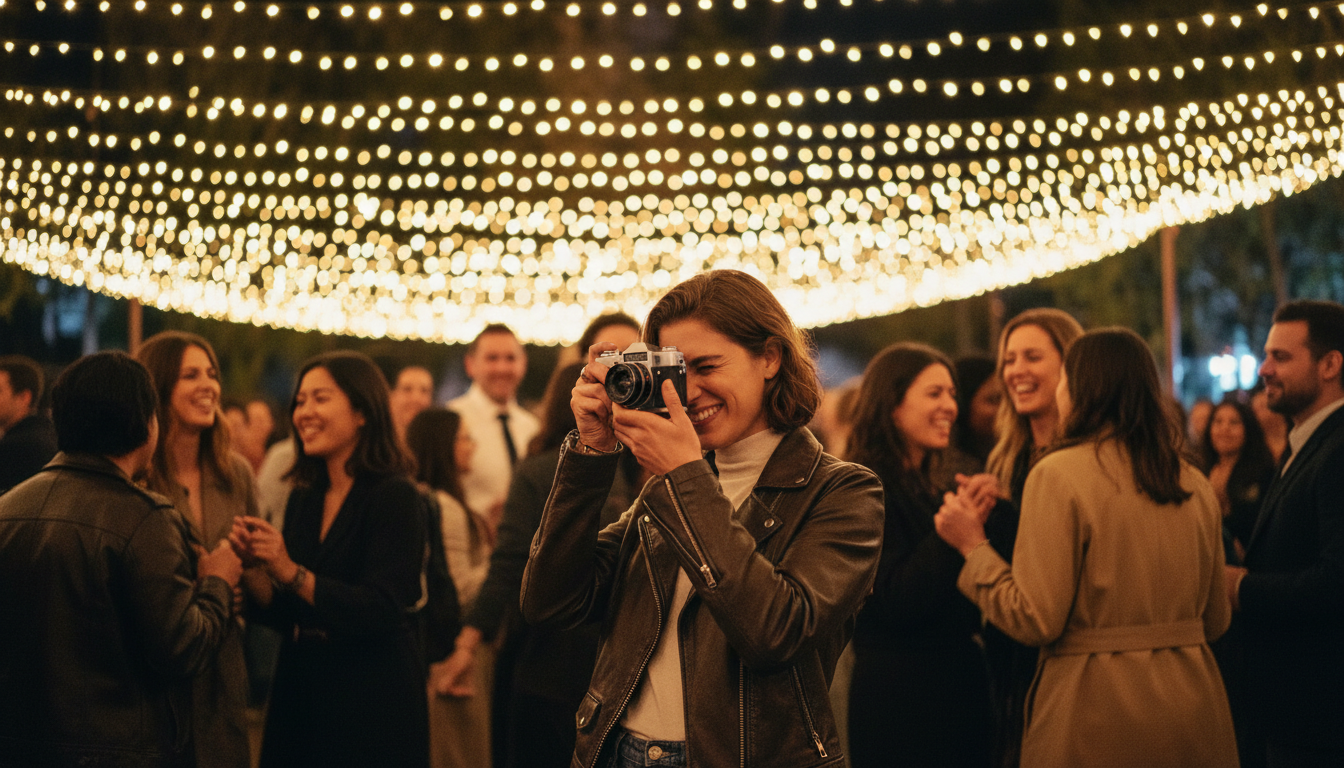
Capture the Vibe: The 2026 Guide to No-Flash Night Photography
Stop ruining event moods with harsh flashes. Learn how to capture stunning low-light photos using ambient light and modern camera tech.